- Home
-
Prints
-
Locations
- Works in Progress
-
Paintings
- Gift Voucher
-
Resources
- Contact
-



Michelle Bellamy paints scenes from Nelson Lakes National Park because it combines many of the things that define her work - remote landscapes, mountain ranges, alpine tarns, tussock, native beech forest and the sense of adventure that comes from exploring wild places. More importantly, it is close to home and a place she has personally explored, so the paintings are based on lived experiences rather than simply scenic views. The landscape offers constantly changing light, weather and colour, giving her plenty to interpret artistically. For her, the small details are just as important as the grand scenery, a tarn, a little hut among the tussock, sunlight shaping the mountain ridge or the texture of the alpine tussocks can become the focal point of a painting. There's also a strong emotional connection, these are places where she has spent time exploring with family, hiking and experiencing the landscape firsthand. That allows the paintings to capture not just what Nelson Lakes looks like, but what it feels like to be there.

After climbing over 1,700 metres past Parachute Rocks, you reach a ridge overlooking this remote alpine tarn. The painting captures both the sweeping scale and intricate details of the high-country landscape, from sunbeams filtering through distant ranges to the still morning water. Tussocks fill the foreground, each carefully layered and individually painted to capture their texture and form. A true labour of love, the artwork portrays a spectacular landscape close to home that holds a special place in Michelle’s heart.

The Travers River is a clear, snow-fed wilderness river flowing through Nelson Lakes National Park, winding past beech forest and tussock flats before reaching Lake Rotoiti. Michelle was drawn to the contrast between the river’s deep blue pools and rushing rapids, set against the towering mountain ranges beyond. The painting captures the movement and clarity of the water, while the shifting light across the valley brings the scene to life. It is a place that truly rewards exploration.
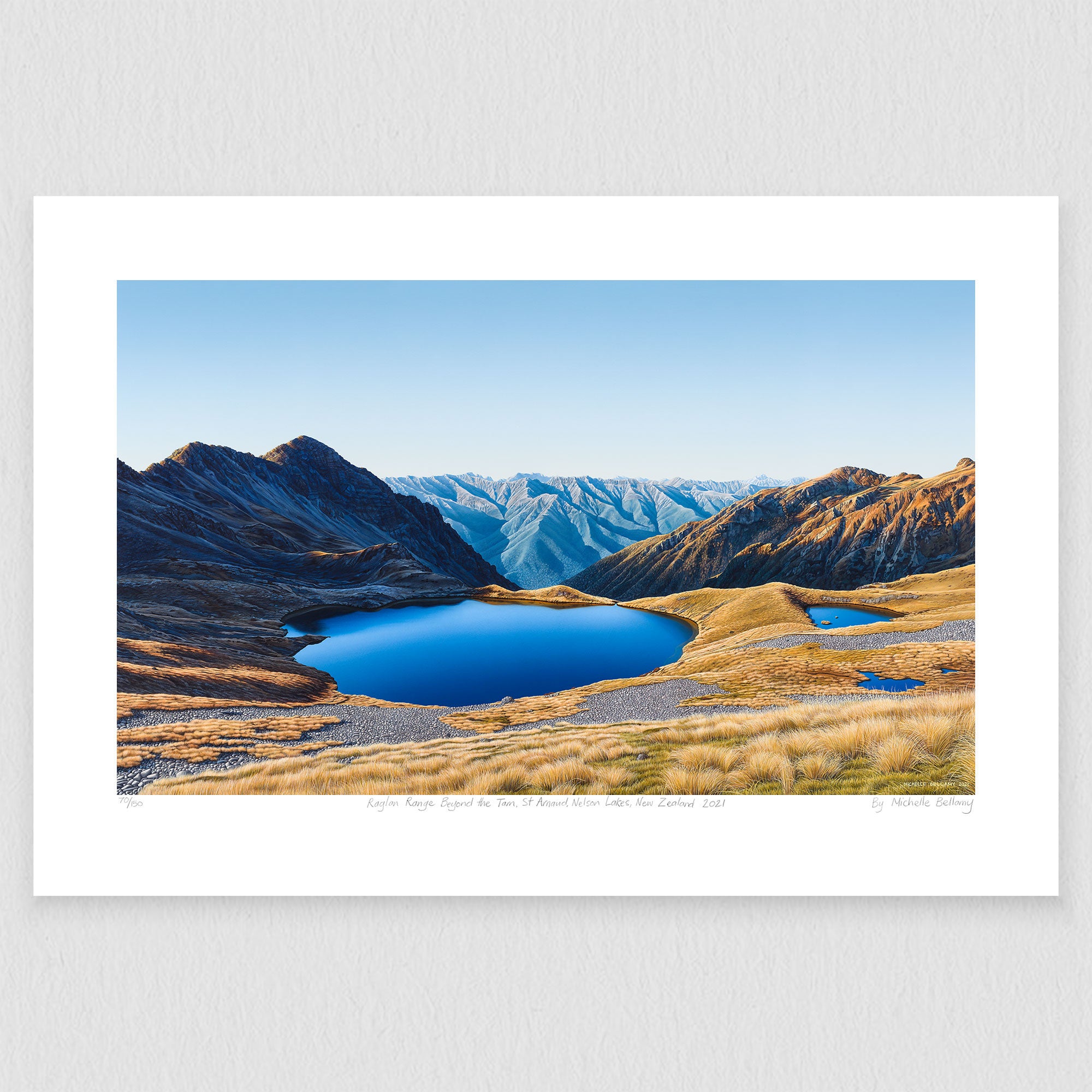
Along the St Arnaud Range, a group of alpine tarns lies in a sheltered basin above Rough Creek, with expansive views towards the rugged Raglan Range. Michelle was inspired by the quiet isolation of this remote landscape, capturing the contrast between the delicate details of the warm afternoon light streaking across the tussocks and the immense scale of the cooler, contrasting surrounding mountains. Soft late afternoon light brings warmth to the landscape, creating a peaceful moment in this remote ridge in the Nelson Lakes.
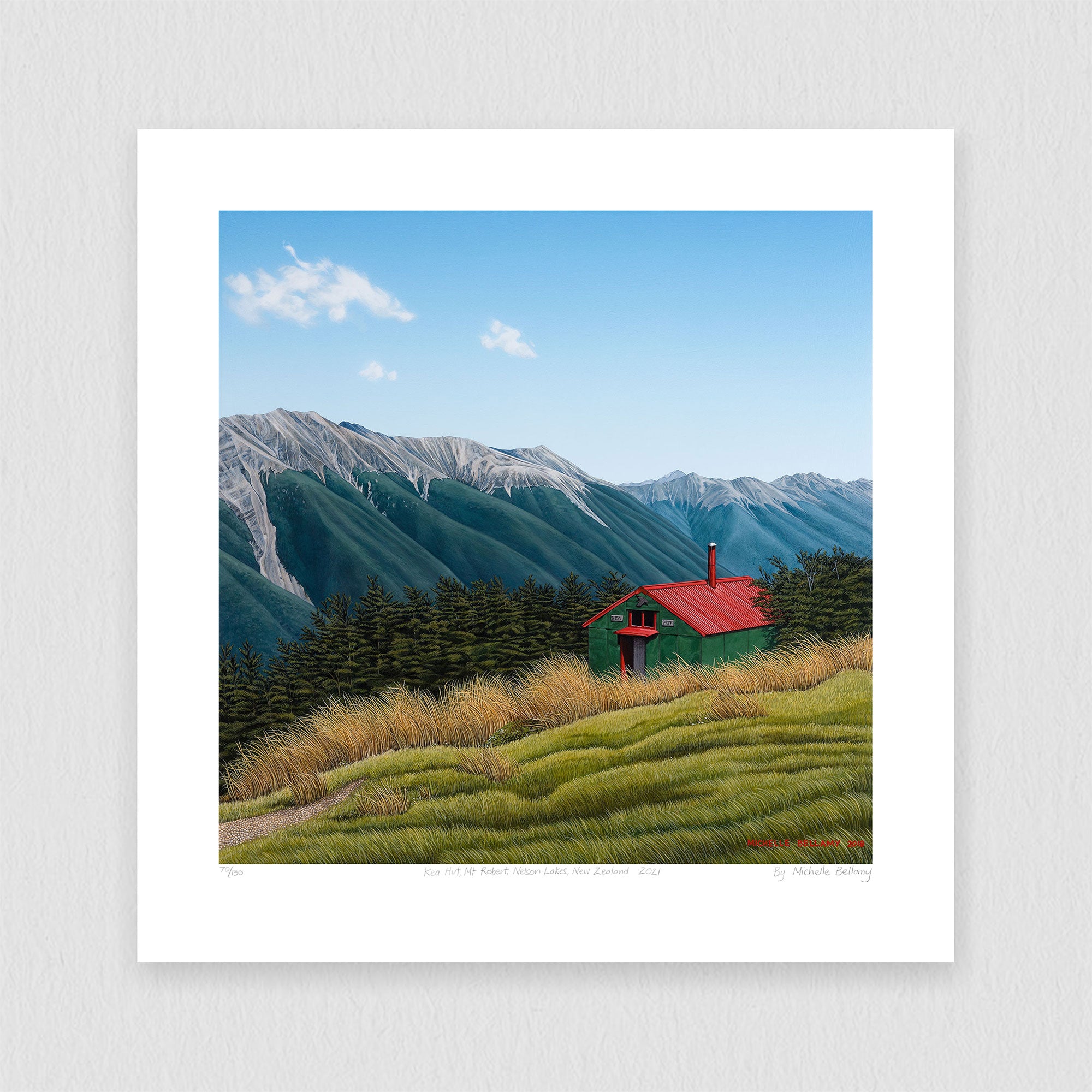
Kea Hut sits among tussock and beech forest in the Mt Robert area of Nelson Lakes National Park. The bright red roof making it a striking feature against the surrounding landscape, it is lovingly restored by the Mt Robert Snow Sports Trust. Michelle was drawn to the way the little hut sits within its rugged setting, surrounded by layers of beech trees and with the St Arnaud Range towering behind. The painting captures the contrast between the quaint little hut, golden tussock and cool mountain tones. Painted with the utmost care and every detail rendered carefully it is a beautiful rendition of a timeless place.
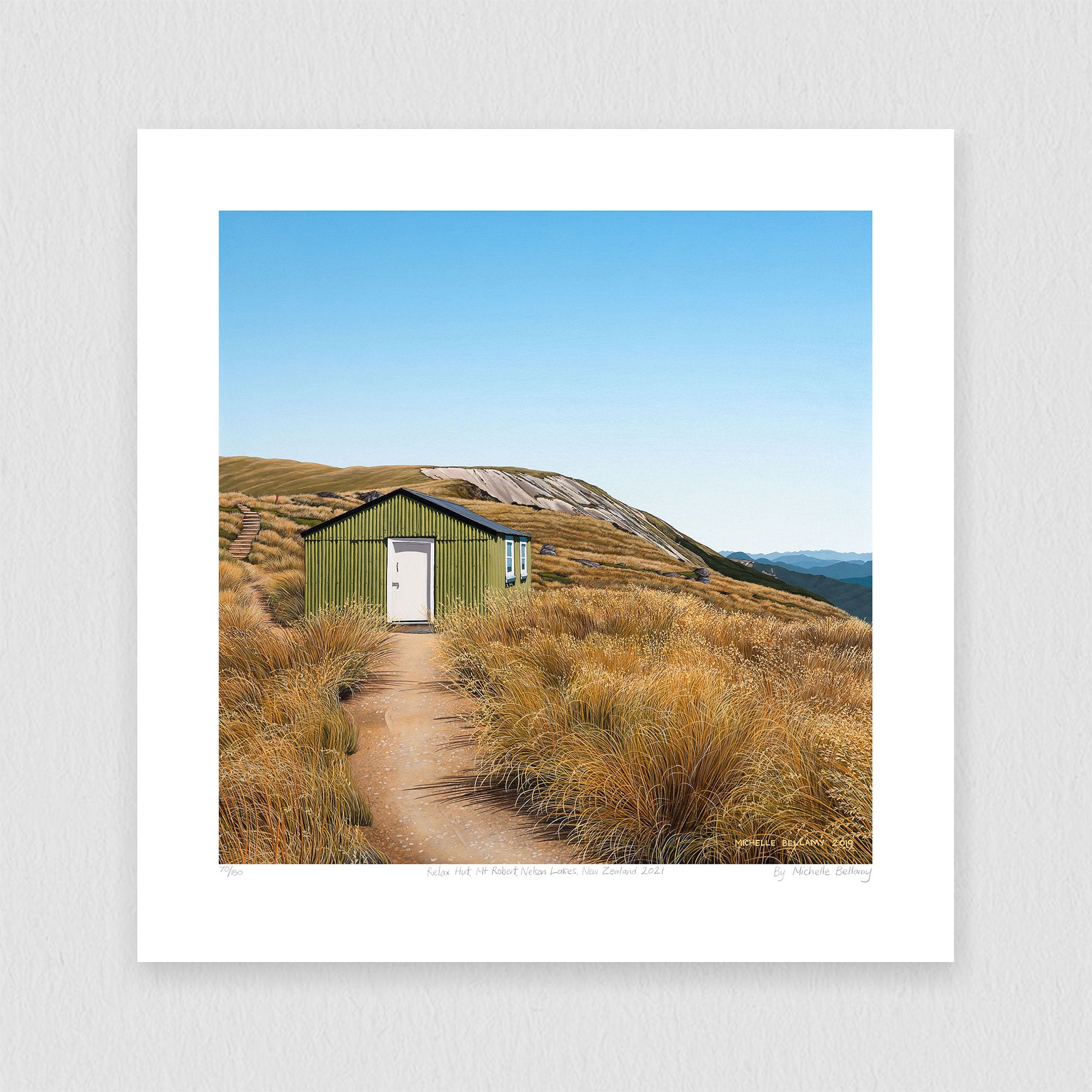
At Lake Rotoiti in Nelson Lakes National Park, the walk up either Pinchgut Track or Paddy’s Track leads to the Relax Shelter, a welcome haven from the wind with spectacular ridge line views and mountains beyond. Michelle was drawn to the shelter’s simple form and its wonderful position within the landscape, surrounded by tussock and native beech forest. In the painting, she has focused on the contrast between the warm earthy tones of the big tussocks and the cool blues of the clear sky and distant mountains. Every detail helps capture the quiet character of this much-loved place.
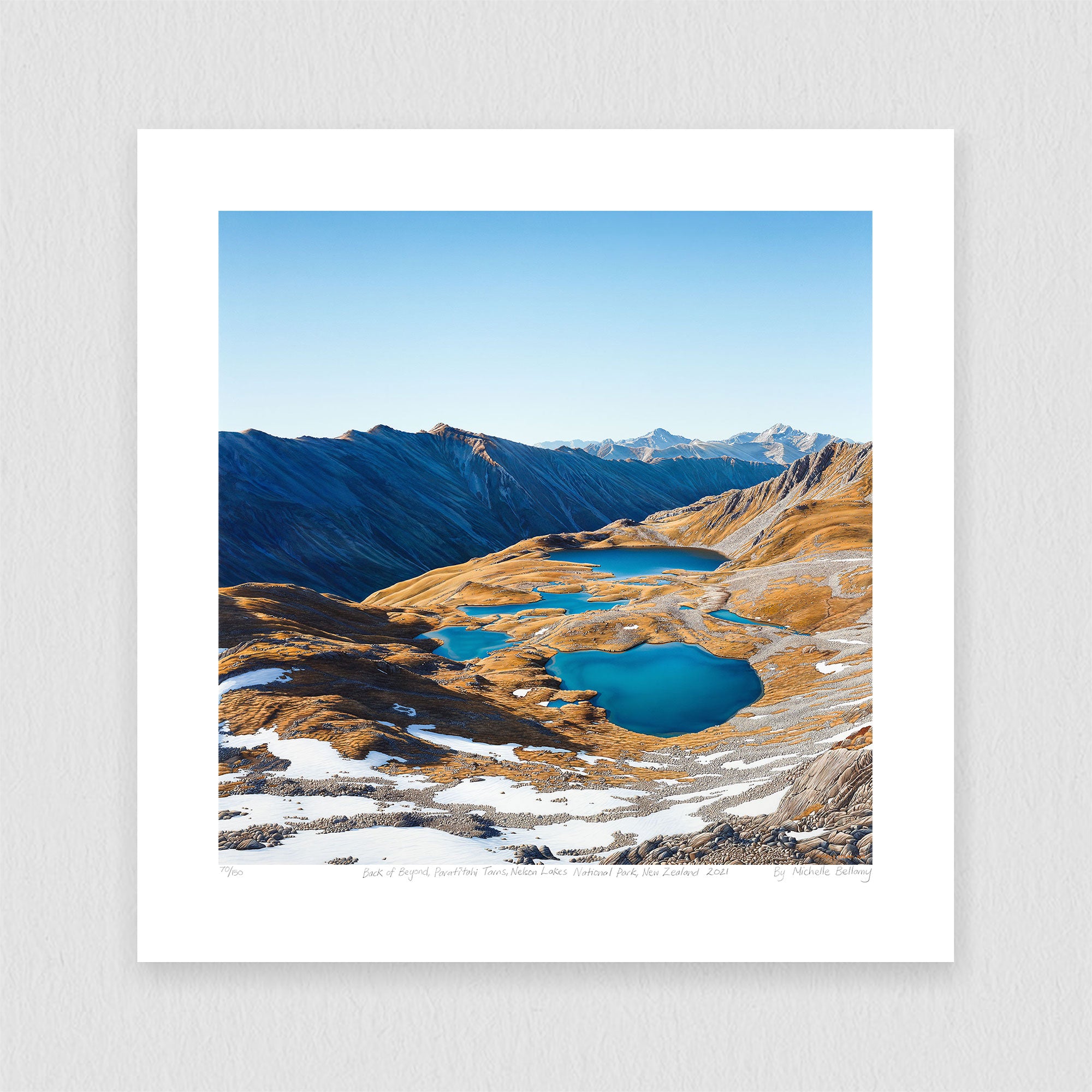
Emerging over the final ridge before descending into the Arnst River valley, the Paratītahi Tarns appear like a hidden alpine paradise. Nestled together within softly rolling tussock basins, the tarns lead the eye towards the distant Mt Chittenden, rising to 2,205 metres. Michelle spent countless hours shaping the golden contours of the tussock, carefully rendering the rugged scree slopes and layering subtle blues across the distant mountains. She wanted to capture the feeling of space, light and solitude found in this remote landscape and each day spent painting this scene transported her back into the ranges.

The views that unfold before you as you crest the ridge include the recently named Paratītahi Tarns and the larger Paraumu Tarn at the very head of the Arnst River. The Paratītahi Tarns, nestled towards the end of the Saint Arnaud Range, offer a serene and secluded landscape that few have the privilege to experience. This off-the-beaten-track destination is accessible from the Rainbow Basin or the head of Lake Rotoiti. After navigating the rugged terrain and scrambling over bulky boulders, the breathtaking beauty of this tarn network is revealed, with pristine creeks weaving through the landscape, surrounded by an almost eerie silence, broken only by the gentle sound of flowing water.

As you climb higher into Nelson Lakes National Park, on the Ella Range, beech forest gives way to open tussock, sub-alpine shrubs and prickly alpine plants, creating a wonderful sense of space and isolation. It was these tarns along the Mole Tops with the Mahanga Range beyond that caught Michelle's attention, their rugged peaks, soft summer colours and cool blue pools of water. She wanted to capture more than the landscape itself, the feeling of being there on a hot summer day, with the tarns offering an irresistible invitation to cool off. Back in the studio, she is focused on the warm evening light, layered mountain tones and intricate tussock detail, capturing the openness and freedom of exploring these remote places with the family.


